Written by Aremuorin
Upon encountering a thought-provoking post on Facebook, I found it imperative to share its profound nature. Despite certain critics insinuating a lack of substantiation, I am astounded by their ignorance when confronted with the statement: “There were Black people here when the Romans arrived, so she probably was not the first.” In response, I firmly assert, “Until concrete evidence proves otherwise, I dare say she unequivocally holds that position. Her regal stature demands recognition, devoid of mere flattery.”
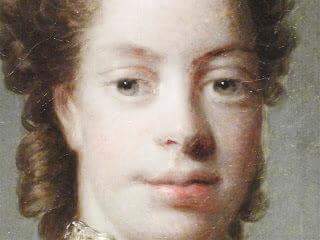
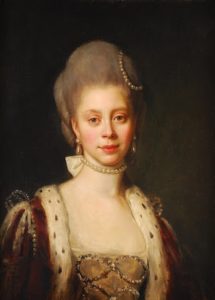
Indeed, Princess Sophie Charlotte, born in 1744, holds the distinction of being the first Black Queen of England. As the daughter of the Prince of Mirow, Germany, and his wife, she was of direct descent from an African branch of the Portuguese Royal House through Margarita de Castro y Sousa. Following her marriage to George III of England at the age of 17 in 1761, she ascended to the throne as the Queen of England and Ireland.
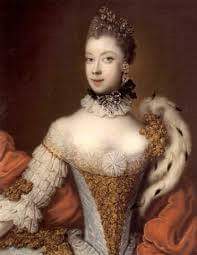
In the terms of the marriage contract, it was stipulated that the young princess must convert to the Anglican church, partake in the marriage ceremony following Anglican rites, and refrain from engaging in any political matters throughout her reign.

While Queen Charlotte maintained a keen interest in global affairs, including the American War, she upheld her marital obligations diligently. Together with King George III, they were blessed with fifteen children, with thirteen reaching adulthood. Among them, their fourth eldest son, Edward Augustus, Duke of Kent, went on to become the father of Queen Victoria.

Queen Charlotte’s significant contributions to shaping modern Britain are not widely recognized, despite her African heritage within the British royal family. Historical portraits of the Queen were often dismissed as fictional depictions of the Black Magi until two art historians shed light on the authentic African features present in the paintings, emphasizing the factual nature of her lineage in the royal family.
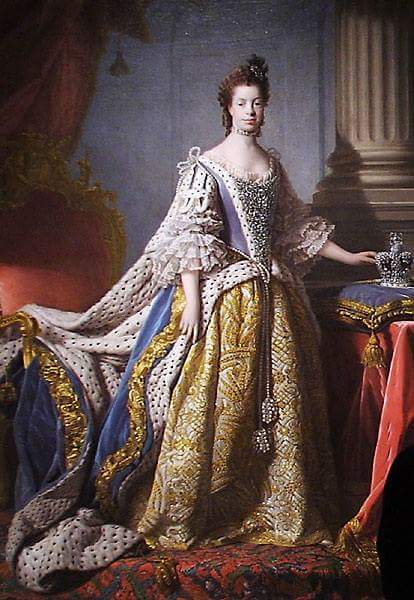
During Queen Charlotte’s time, slavery was widespread, and the anti-slavery movement was gaining momentum. Portrait painters commissioned to depict the royal family often downplayed or softened Queen Charlotte’s African features. For instance, Sir Thomas Lawrence’s portrait of Queen Charlotte in 1789 was rejected by the royal couple due to their dissatisfaction with how the Queen’s likeness was portrayed.
The existing portraits, including those by Sir Allan Ramsey, showcasing Queen Charlotte’s African features, could be perceived as carrying on the political agenda of those who oppose the idea of a multi-racial royal family in Britain. Sir Allan Ramsey notably produced the majority of the Queen’s paintings, featuring more authentic African representations compared to other artists.

Ramsey’s authentic portrayal of Queen Charlotte may have stemmed from his identity as an anti-slavery intellectual of his time. His Coronation painting of the Queen, distributed to the colonies and Commonwealth, subtly played a role in the anti-slavery movement. Furthermore, Johann Zoffany depicted the Royal family in informal family settings. Queen Charlotte, a woman of learning, demonstrated her passion for the arts through her correspondence, her patronage of Johann Christian Bach’s music, and her support for Bach’s wife after his passing. Notably, a young Wolfgang Amadeus Mozart dedicated his Opus 3 piece to the Queen at her request when he was just eight years old.

In addition to her cultural contributions, Queen Charlotte had a keen interest in botany and was instrumental in the establishment of Kew Gardens, introducing exotic plants like the Strelitzia Reginae from South Africa. She was also credited with introducing the Christmas tree to England, adorning it with a variety of treats and decorations. Furthermore, Queen Charlotte Maternity Hospital in London stands as a testament to her charitable endeavors, being the oldest maternity care institution in England, providing vital support to mothers in need.

Queen Charlotte passed away on November 17, 1818, at Dutch House in Surrey, now known as Kew Palace, in the presence of her eldest son, the Prince Regent. She was laid to rest at St George’s Chapel in Windsor. The Queen’s personal writings, found in her 444 letters to her brother, Charles II, Grand Duke of Mecklenburg-Strelitz, provide a glimpse into her innermost thoughts and feelings. In a letter dated May 23, 1773, she reflects on the privilege and duty that came with her royal position. Queen Charlotte found solace in her Christian faith, drawing strength and purpose from Biblical teachings, and acknowledging her role as a servant of God that transcended her earthly royal duties.

Thank you for sharing such illuminating information about Queen Charlotte. Her legacy extends through generations, with her descendants including the present Queen Elizabeth II. The exhibition in 2004 at the Queen’s Gallery showcased Charlotte and George’s artistic tastes, reflecting their contributions to the arts. Today, the influence of Queen Charlotte can be seen in places like Kew Gardens, the Queen Charlotte Maternity Hospital, as well as locations globally named in her honor, like Charlotte town in Canada and Fort Charlotte in St Vincent, West Indies. Let’s spread this knowledge and shed light on Queen Charlotte’s remarkable impact.
External Refs – Wikipedia
What’s your view? Share this with someone!
Produced by Aremuorin

Aremuorin is a multi-talented musician, singer-songwriter, producer, and author known for his captivating music and insightful writing. He hails from Nigeria and is based in the United Kingdom. His work spans across various creative fields, making him a versatile artist.
Don’t forget to subscribe like, share or comment below. Thank You.
FAIRUSE – REACTION – NEWS REPORTING – EDUCATION.
All video clips reviewed in my streams comply with FAIR USE and is transformative in nature. Know the LAW and don’t abuse the Youtube system with false claims.
If you post anything on Youtube other creators can use anything you post under FAIR USE and they don’t need to ask for your permission. Educate yourself and know the law to avoid violating Youtube’s terms of service with false claims. Everything in my videos is alleged and for education and entertainment.
Disclaimer: Copyright Disclaimer under section 107 of the Copyright Act of 1976, allowance is made for “fair use” for purposes such as criticism, comment, news reporting, teaching, scholarship, education and research. Fair use is a use permitted by copyright statute that might otherwise be infringing. Reviewing videos, comments and educating the community.
(C) 2016 MercyfulGrace
 MercyfulGrace
Leave a comment