Growing up in Nigeria, I learned that a song, a quotation or a book could enter a home from thousands of miles away and quietly change the person listening or reading. Long before I knew where creativity would take me, words gave shape to possibilities I could not yet see.
They showed me that the world was larger than my immediate surroundings. They introduced new ways of thinking, feeling and dreaming. Sometimes the person who writes the words never knows whose life they will reach. Yet the words travel, crossing borders, cultures and generations to meet someone at exactly the right moment.
That is one of the miracles of literacy. Reading is not only the ability to recognise words on a page. It is an invitation to imagine a life beyond what is currently visible.
Words That Cross Borders
Books, lyrics and quotations can go where their creators cannot. They can enter homes, classrooms, hospitals, prisons and private moments of uncertainty. They can comfort a child, challenge an adult or awaken courage in someone who has almost stopped believing in possibility.
My own journey has carried me from a Nigerian childhood to life as an artist, songwriter, writer and humanitarian in London. Across every chapter, words have remained a bridge. They have helped me translate experience into meaning and pain into purpose. They have also allowed my own ideas to travel farther than I could ever travel alone.
Literacy gives people the ability to ask questions, understand another person’s point of view and communicate their own truth. It does not guarantee an easy life, but it gives us more tools with which to shape one.
Literacy Is More Than Reading
On International Literacy Day, it is important to remember that literacy is connected to almost every part of human dignity. A person who can read has greater access to health information, employment opportunities, legal rights, contracts and public services. Literacy can build confidence and make exploitation more difficult. It helps people take part in decisions that affect their families and communities.
In 2026, International Literacy Day marks its 60th anniversary under the theme “Literacy for people, the planet and prosperity.” UNESCO reports that at least 739 million young people and adults still lack basic literacy skills, while four in ten children in lower-income countries are not reaching minimum reading proficiency.
Those figures are not abstract. Each number represents a person whose choices may be narrowed because essential knowledge remains out of reach. Access to books and education should never depend on wealth, location, gender or social standing.
When Words Help Us Heal
Words also have a private, healing power. Reading can help us recognise feelings we have struggled to name. Writing can create a safe place to process shame, grief, trauma and isolation. A page can hold what the voice is not yet ready to say.
For people of faith, words can also become a meeting place between the human spirit and divine hope. Sacred texts, prayers, testimonies and songs have carried people through generations of hardship. Faith becomes more meaningful when it does not silence questions, but gives us the courage to seek truth with compassion.
When someone learns to articulate their own story, other people lose some of the power to define them. That is why creativity matters. It allows us to reclaim language that has been used against us and transform it into something honest, beautiful and useful to others.
Literacy Is Humanitarian Work
This is why I see literacy as humanitarian work. Feeding a person matters. Protecting a person matters. Helping someone read, write and communicate also matters because it strengthens their ability to advocate for themselves long after immediate help has passed.
Through MercyfulGrace and Humanity in Action, I continue to believe that compassion must be practical. We do not serve people by speaking over them. We serve by helping create the conditions in which they can speak, be heard and participate fully in their own future.
A book in the right hands can become more than an object. It can become permission to dream, a source of knowledge, a mirror of identity or the first map towards a different destiny.
From a Sentence to a Destiny
I write because the right words can meet someone in a room I may never enter. A sentence can become encouragement, encouragement can become courage, and courage can redirect a life.
“A book can travel where its writer cannot, entering a life quietly and leaving behind a new possibility.”
Àrèmúorin
Perhaps you remember a book, lyric or quotation that found you when you needed it most. Honour that gift by passing it on. Recommend a book. Read with a child. Encourage someone who is learning. Share words that open doors rather than close them.
Our words may travel farther than we ever will. Let us make sure they carry truth, dignity, imagination and hope.
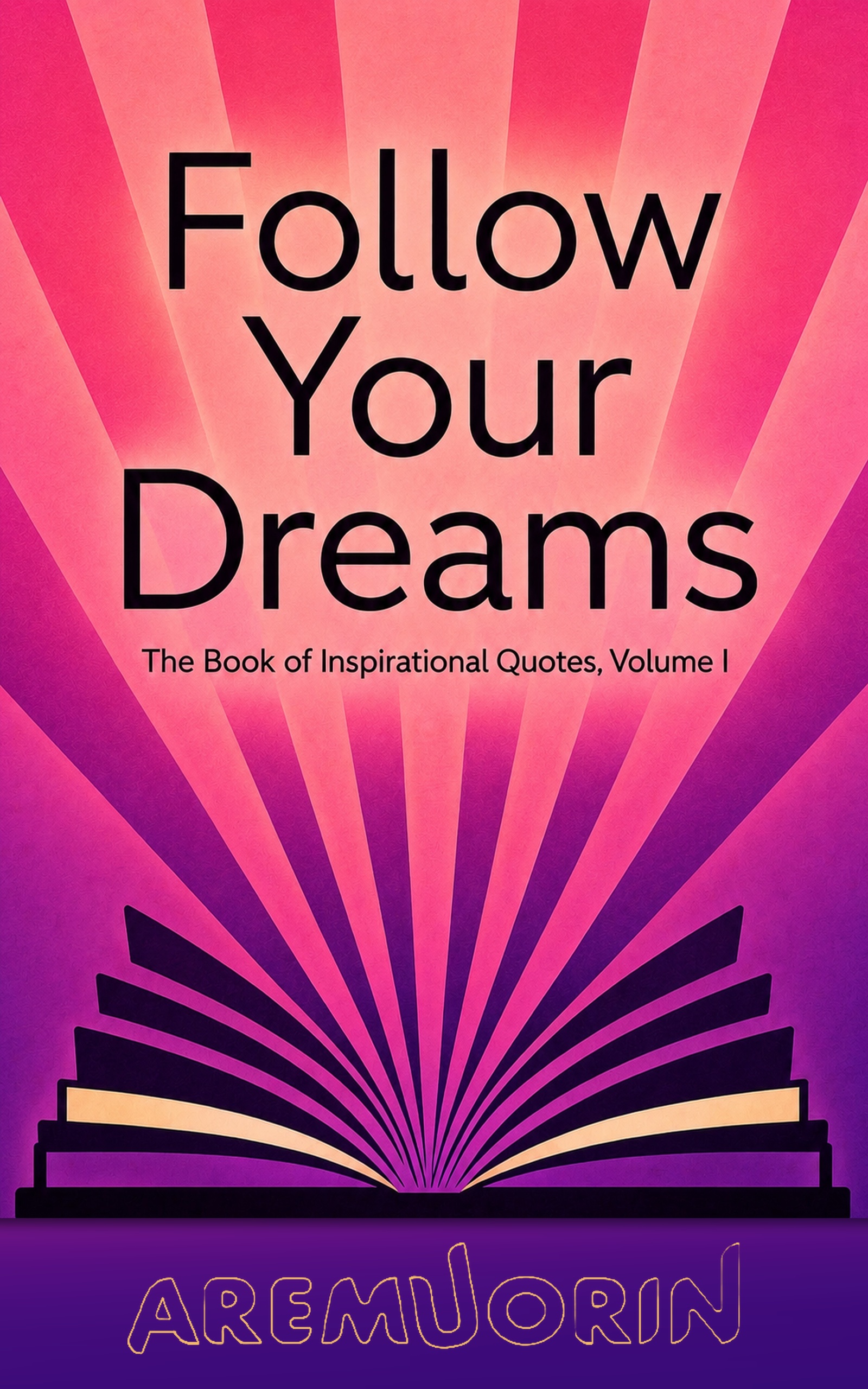
If words have ever helped you rise, rebuild or imagine something greater, continue the journey with Follow Your Dreams: The Book of Inspirational Quotes, Volume I by Àrèmúorin.


Leave a comment