Written by Aremuorin / Contact / Mailing List / Linktree / Latest Post / WhatsApp – Let’s keep the conversation going !!!

Introduction
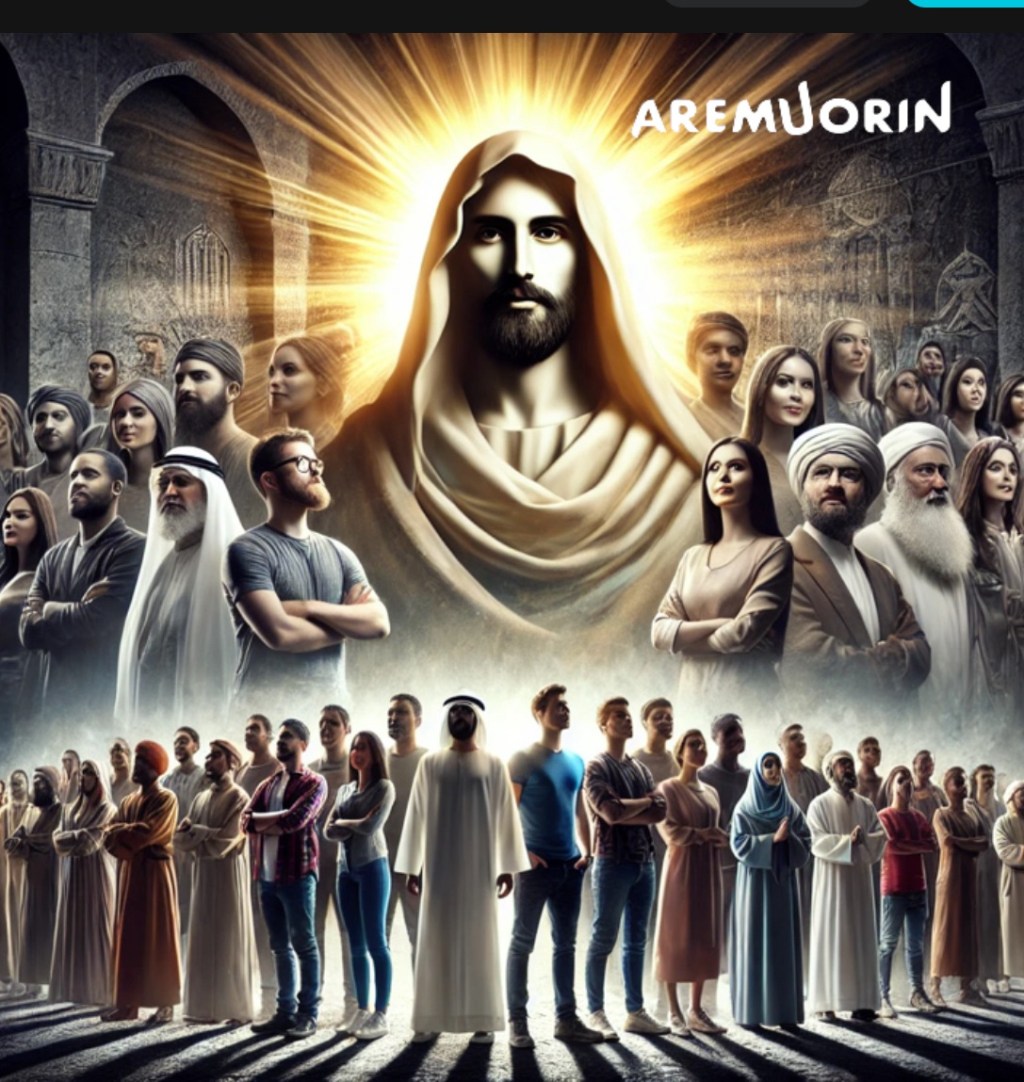
In our modern world, imagery profoundly shapes belief systems. Yet, the portrayal of Jesus as a white figure is far more than an artistic convention—it’s a psychological and cultural construct that perpetuates racial hierarchies. By examining this visual deception, we uncover how this dominant portrayal has been used not just in religious art but in constructing deeply ingrained societal biases that have harmed marginalized communities for centuries.
This exploration delves into the psychological, historical, and sociopolitical consequences of the “white Jesus” image and provides compelling arguments for why this misrepresentation must be challenged and corrected.
Historical Context – The Whitewashed Origins of an Icon
The depiction of Jesus as a white man is a product of centuries of European artistic influence. Early Christian art began shaping the image of Jesus in ways that reflected the artists’ own backgrounds, but it wasn’t until the Renaissance that these portrayals became widespread and accepted. Leonardo da Vinci, Michelangelo, and other influential artists played pivotal roles in cementing this white European image, which has since dominated Western Christianity.

But Jesus was a man of Middle Eastern (North Africa) descent, born to Jewish parents in Bethlehem—his physical features were likely far different from the pale-skinned, blue-eyed representations that emerged in European art. This whitewashing didn’t just shape aesthetic preferences—it began to play a role in the psychological, political, and spiritual formation of global cultural norms.
The Psychological Impact – Gaslighting, Inferiority, and Internalized Oppression
The damage caused by the portrayal of a white Jesus isn’t merely symbolic. For communities of color, it’s an ongoing psychological assault. When the divine, moral, and holy are consistently depicted through the lens of whiteness, it reinforces an implicit idea: that divinity, virtue, and moral goodness are inherently white.

Psychologist Dr. Joy DeGruy, in her pioneering work on Post-Traumatic Slave Syndrome, describes how centuries of racial trauma and the reinforcement of white superiority in religious contexts leads to internalized oppression. Non-white communities, bombarded by these images, face the double burden of both spiritual and racial exclusion.
As Dr. Michael Eric Dyson points out, “The portrayal of Jesus as white isn’t just an issue of historical accuracy—it’s a manipulation that reinforces the belief that white is synonymous with holiness, with virtue, with power.”
This myth of a white Jesus contributes to a collective racial inferiority complex for people of color, perpetuating societal constructs of superiority and exclusion. The deeply ingrained nature of this imagery serves as an ongoing gaslight—a deliberate attempt to distort the self-perception of marginalized communities by erasing their rightful place in the spiritual and moral realms.
The Sociopolitical Cost – The Weaponization of Whiteness
The image of a white Jesus has been weaponized throughout history to support colonial and imperial agendas. As European powers expanded across the globe, the “white Jesus” was used as a symbol to justify the domination of non-white cultures, laying a spiritual foundation for the racial hierarchies that would underpin slavery, apartheid, and colonization. This wasn’t just a matter of art—it was a matter of power.
Theologians and political theorists, such as Dr. Robert C. Smith, suggest that the idea of a white Jesus was instrumental in legitimizing European supremacy. “By casting the divine in their own image, Europeans were able to give spiritual authority to their political power, positioning themselves as the moral arbiters of the world.”
This notion persists today in various forms, from the alt-right movements that cling to religious supremacist ideologies, to more subtle forms of cultural dominance. The white Jesus image is used to reinforce a social structure in which the West remains seen as morally and spiritually superior to the rest of the world.
The Call for Reclamation – Reclaiming Jesus’s True Identity
Reclaiming the true image of Jesus as a Middle Eastern Jewish man is about more than correcting historical inaccuracies—it’s about dismantling the harmful ideologies that have grown from centuries of misrepresentation.
Theologian Dr. Miroslav Volf argues, “To recognize Jesus in his true cultural context, as a man of color, is to confront a system that has long perpetuated the myth of racial hierarchy.”
This movement is not just a call for inclusivity in religious art; it’s a radical challenge to the broader cultural and political structures that have upheld racial inequality. By returning to an accurate representation, we allow a more authentic connection to the divine—one that resonates with people of all racial and cultural backgrounds.
The Path Forward – Toward a New Spiritual Imagery
As we begin to revise these historical narratives and embrace more inclusive representations, we acknowledge a profound truth: divinity, virtue, and moral purity are not bound by race. The more diverse and accurate depictions of Jesus we see, the more we move toward an inclusive spiritual worldview, where people of all backgrounds can identify with the divine.
This represents a profound cultural shift. By acknowledging Jesus’s true ethnic and cultural background, we can begin to heal the wounds caused by centuries of racial misrepresentation. This transformation isn’t just about art; it’s about restoring the dignity and humanity of all people—making space for every person to see themselves reflected in the divine.
Conclusion – A Transformative Reclamation
The enduring image of a white Jesus has far-reaching implications. It not only distorts historical truth but also perpetuates psychological, sociopolitical, and spiritual inequalities. By reclaiming a more accurate representation of Jesus, we can dismantle these long-held myths and create a more inclusive, equitable future for all.
Let this be a call for cultural, spiritual, and racial reclamation. When we finally break free from this visual deception, we allow a more honest and inclusive world to take shape—one where spirituality transcends race and where every individual can see themselves in the image of the divine.
So, it’s fair to say ‘White Jesus’ is a fraud. If God could be stolen, and trade marked, ‘White Jesus’, would have added that to its bucket list !!!
How about enough already !!!
#WhiteJesusMyth #RacialJustice #ReclaimingJesus #InclusiveSpirituality #PsychologicalImpact #CulturalReclamation #DivineRepresentation #SocialJustice #ReligiousReform #IdentityAndFaith
Aremuorin is a multi-award-winning art artist, writer, and humanitarian, known for his unique fusion of music, writing, and advocacy. With a focus on empowerment and social justice, his work aims to inspire, educate, and uplift communities worldwide. Aremuorin has been honored with numerous accolades, including awards in the UK, USA, and Africa, and holds two honorary doctorate degrees for his contributions to both the arts and humanitarian work. His artistry goes beyond entertainment, as he uses his platform to bring attention to issues of mental health, social change, and cultural pride.
Written by Aremuorin / Contact / Mailing List / Linktree / Latest Post / WhatsApp – Let’s keep the conversation going !!!
(C) 2025 Aremuorin – All Rights Reserved
 MercyfulGrace
Leave a comment