
Written by Aremuorin / Contact / Mailing List / Latest Post / Linktree – Let’s Connect !!
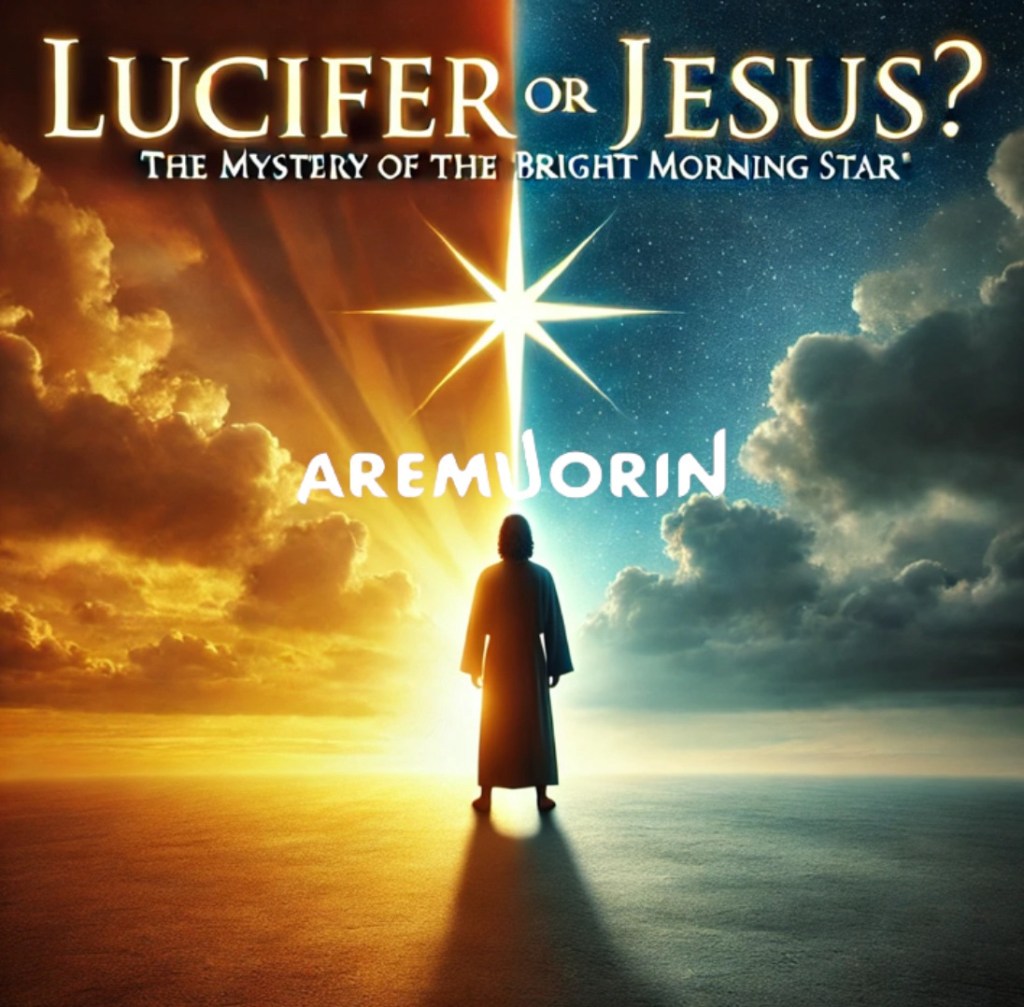
A deep dive into the controversial and thought-provoking symbol of the “Morning Star,” exploring its dual meaning and theological significance in both the fall of Lucifer and the exaltation of Jesus.
Introduction: A Tale of Two Stars
The term “Bright Morning Star” stirs debate, mystery, and theological pondering. Is this title reserved for the risen Savior, Jesus Christ, or does it symbolize the fallen archangel by Lucifer? How can one phrase in scripture refer to two such different figures in Christian theology? This blog will explore the complex meaning behind the title “Morning Star,” examine its biblical and theological implications, and investigate why such a seemingly simple metaphor holds such depth.
The Bright Morning Star: Jesus’ Glorious Title
In the New Testament, the title “Bright Morning Star” is most commonly associated with Jesus Christ, especially in the Book of Revelation. In Revelation 22:16, Jesus himself says:
“I, Jesus, have sent my angel to give you this testimony for the churches. I am the Root and the Offspring of David, and the bright Morning Star.” (NIV)
This is a profound claim about Jesus’ divine authority and messianic role. As the “Morning Star,” Jesus is depicted as the ultimate light, heralding the coming of God’s Kingdom. The imagery evokes a sense of hope, purity, and renewal—Jesus’ arrival brings light into the world, much like the first light of dawn. According to theologian John Owen, this metaphor emphasizes Christ’s role as the harbinger of divine revelation and salvation, the One who dispels the spiritual darkness of sin.
The concept of the “Morning Star” as an emblem of Jesus also draws from Old Testament prophecy. In Numbers 24:17, Balaam, the prophet, predicts:
“I see him, but not now; I behold him, but not near. A star will come out of Jacob; a scepter will rise out of Israel.” (NIV)
Here, the “star” symbolizes a coming ruler—an allusion to Jesus as the Savior of Israel and the world.
Lucifer: The Fallen Morning Star
In contrast, the title “Morning Star” also appears in Isaiah 14:12, where the prophet addresses the fallen angel Lucifer:
“How you have fallen from heaven, O Morning Star, son of the dawn! You have been cast down to the earth, you who once laid low the nations!” (NIV)
This passage is often interpreted as describing the pride and eventual fall of Lucifer. Once a glorious archangel, Lucifer sought to elevate himself above God, leading to his catastrophic downfall. Augustine of Hippo, in his work The City of God, argues that Lucifer’s ambition to be as exalted as God is what led to his rebellion and eventual expulsion from Heaven. Lucifer’s fall symbolizes the dangers of pride and the destructive nature of sin.
Interestingly, the term “Morning Star” here is used ironically. Lucifer, once a symbol of light and beauty, becomes a symbol of corruption and darkness. This inversion reflects the tragic consequences of hubris—Lucifer’s rise to prominence was his undoing.
Theological Contradictions and Contexts
So how do we reconcile these two interpretations of the same title? Jesus and Lucifer are both described as “Morning Stars,” yet they represent opposing forces in Christian theology. R.C. Sproul, a respected Reformed theologian, notes that while the title “Morning Star” in both contexts refers to heavenly beings, their natures and roles diverge significantly. Jesus is the fulfillment of God’s redemptive plan, while Lucifer represents the destructive force of sin and rebellion.
One explanation is the dual use of the title to show the stark contrast between Christ’s humility and Lucifer’s pride. Both figures start as radiant stars but take different paths—one to salvation, the other to damnation.
Additionally, scholars often point out that Isaiah 14:12 was originally directed at the king of Babylon, but over time, it became associated with Lucifer due to its thematic elements of pride and downfall. This context enriches our understanding of the “Morning Star” as a symbol of both greatness and ruin.
Cross-References: Light vs. Darkness
The dichotomy between Jesus and Lucifer as the “Morning Star” highlights the broader biblical theme of light versus darkness. In John 1:4-5, the apostle John writes:
“In him was life, and that life was the light of all mankind. The light shines in the darkness, and the darkness has not overcome it.”
Jesus, as the “Morning Star,” represents this divine light that overcomes spiritual darkness. In contrast, Lucifer’s title as the “fallen Morning Star” suggests that darkness will inevitably overtake those who oppose God’s will.
Theological Opinions: Scholars Weigh In
1. N.T. Wright, a leading New Testament scholar, suggests that these contrasting uses of “Morning Star” serve as a powerful reminder of the consequences of divine rebellion versus the rewards of divine submission. Lucifer’s fall stands in stark contrast to Jesus’ humble submission to the will of God.
2. Tim Keller, in his book The Reason for God, discusses how the dual imagery of the “Morning Star” also functions as a critique of worldly power structures. Just as the King of Babylon was once a “Morning Star” and fell, so too do all human authorities who fail to acknowledge their dependence on God.
3. Walter Brueggemann, a prominent biblical scholar, posits that Isaiah 14:12 is a warning about the idolatry of power. He connects the “Morning Star” title with Lucifer’s original role as a bearer of light, only to be undone by his own self-exaltation.
The Mystery and Significance
So, what is the takeaway from this complex theological riddle? Perhaps it’s that the title “Morning Star” encapsulates the stark choice faced by every individual: to walk in the light of Christ, the true Morning Star, or to succumb to the darkness of pride, as Lucifer did. It’s a reminder that light and darkness are not just cosmic forces but spiritual realities we must confront daily.
In the end, both Jesus and Lucifer embody the two extremes of human existence—one leading to eternal life and the other to eternal destruction. The “Morning Star” is not just a title but a profound theological statement about the choices that shape our destinies.
Conclusion: The Power of Duality
The title “Bright Morning Star” serves as both a symbol of divine grace and a warning about the dangers of pride. Jesus, the true Morning Star, represents redemption and hope. Lucifer, the fallen star, represents pride and rebellion. This duality forces us to reflect on our own choices and our position in relation to divine light.
Hashtags
#MorningStar #Lucifer #JesusChrist #Theology #BiblicalStudies #FaithAndPride #LightAndDarkness #Christianity #TheologicalDebate #BibleTruth

About the Author:
Aremuorin, a renowned polymath holding dual honorary doctoral degrees and serving as a UN Ambassador, is celebrated for his captivating musical creations and profound literary works.
Aremuorin is a writer, producer, and social advocate passionate about creating impactful narratives that explore human resilience and societal change. With a unique blend of personal experiences and creative storytelling, Aremuorin crafts stories that resonate with a global audience, pushing boundaries while sparking important conversations.
Aremuorin is a distinguished Multi Awardee Conscious Writer and accomplished Holistic Jazz-Soul Singer-Songwriter & Producer, reigning at the No. 1 spot on the Jazz Charts for over 49 weeks. He held the top 10 spot for over 490 weeks.
Copyright Notice:
© 2024 Aremuorin. All rights reserved.
Contact Details:
Email: Aremuorin@aremuorin.me
Website: www.aremuorin.me
Social Media: Linktree/Aremuorin
 MercyfulGrace
Leave a comment